There's a meaningful difference between a farm that grows food you enjoy eating and a farm that grows food you need to survive. Both have value. But in the context we're living in — climate instability, supply chain fragility, and the real possibility of sustained disruption — we think it matters to understand which one you're investing in.
Two different approaches to feeding people
Market Farming / Traditional CSA
Optimized for variety, seasonality, and culinary interest. You get beautiful produce during the growing season.
- Emphasis on fresh-eating vegetables and herbs
- Seasonal — typically June through October
- Crop selection driven by what's interesting and marketable
- Low caloric density per square foot
- When the season ends, you return to the grocery store
- If supply chains break, your share doesn't cover the gap
Provision Farming / Resiliency CSA
Optimized for caloric density, nutritional completeness, and year-round storage. You get food security.
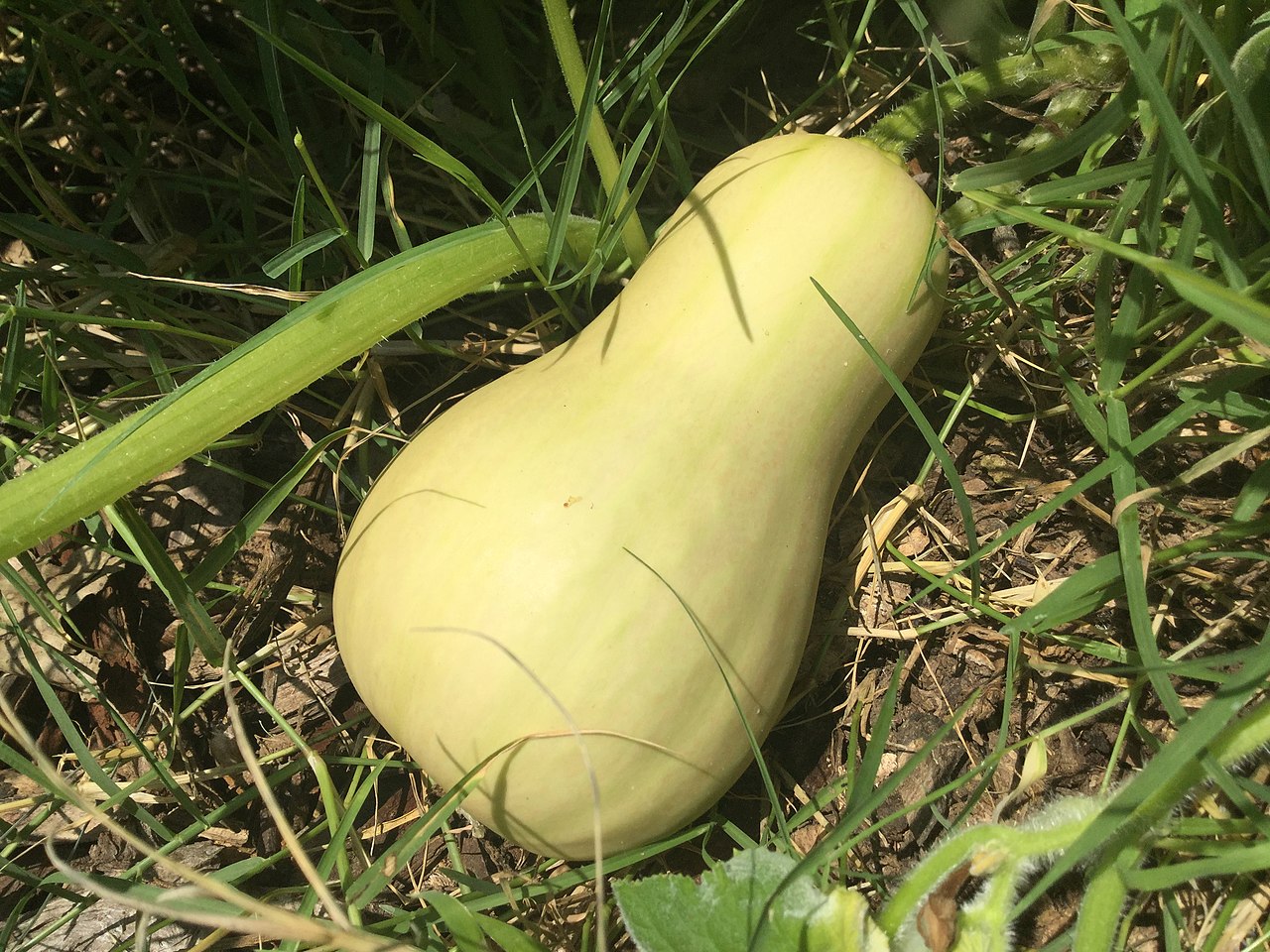
- Emphasis on staple crops: potatoes, dry beans, storage roots, squash
- Year-round — harvest stores through winter and spring
- Crop selection driven by calories, protein, and shelf life
- High caloric density per square foot
- Designed to reduce grocery dependence, not supplement it
- If supply chains break, your share is the backup plan
We're not against market farming — beautiful summer tomatoes and fresh herbs are wonderful. But that's not what we're building. The Resiliency CSA is a provision farm. Our crop plan is designed around one question: how much nutritionally complete food can we produce per square foot, that stores without refrigeration, and feeds real households through real winters?
The math: how much land feeds one adult?
This is the number that changes how you think about food security. It's not abstract — it's square feet of soil. And when you see it drawn to scale against a typical suburban lot, the case for community farming makes itself.
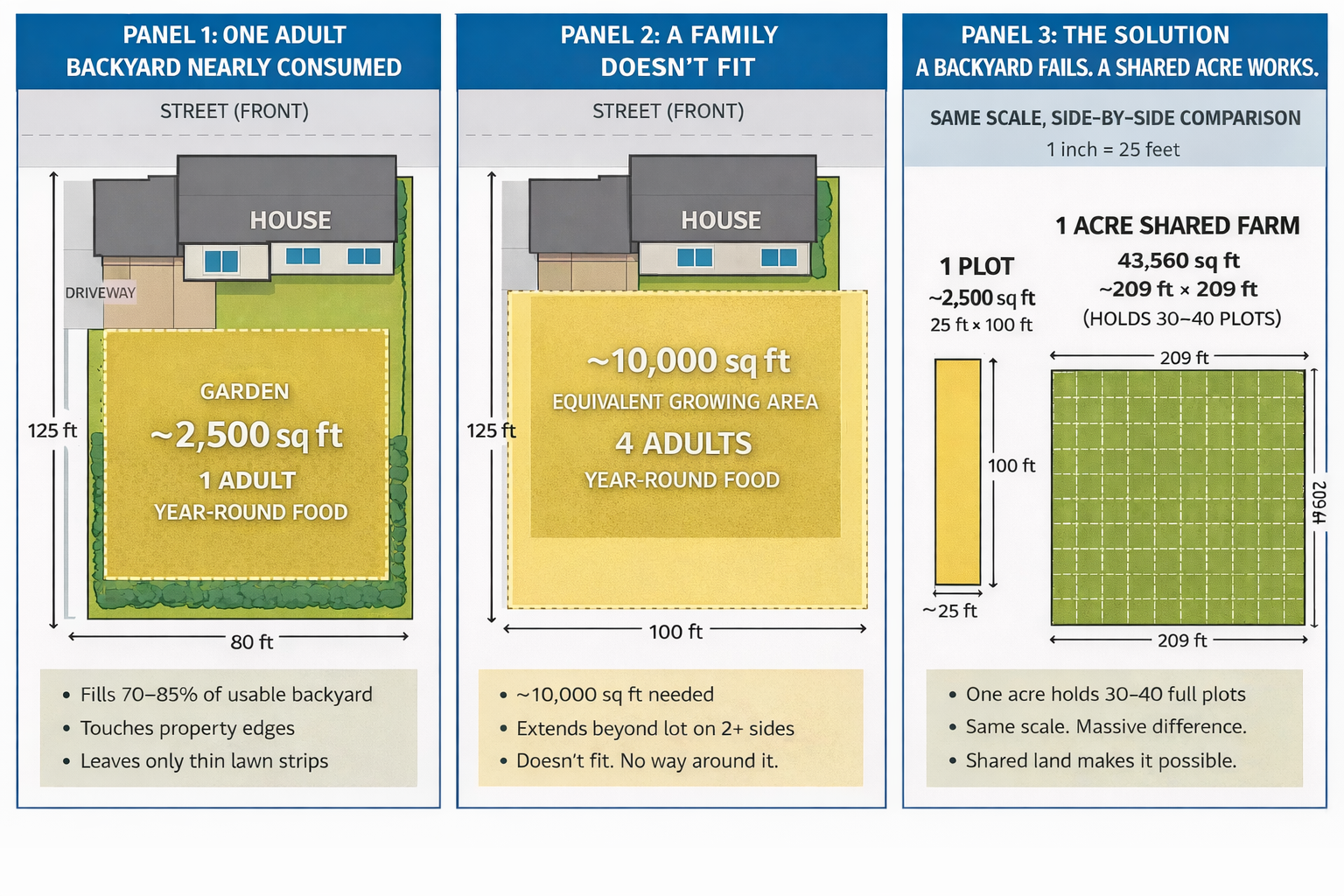
A backyard fails. A shared acre works. All panels shown at the same scale.
Potato Share — caloric foundation
Potatoes are the most efficient calorie-per-square-foot crop for our climate zone (8b, Woodland WA). They store for months in a cool, dark space with zero processing. They're the staple that kept entire civilizations fed.
| Variable | Per Adult | Notes |
|---|---|---|
| Daily consumption target | 0.5 lb / day | ~175–195 calories; caloric base, not sole food source |
| Annual need | ~182 lbs | 365 days × 0.5 lb; add 10% for storage loss = ~200 lbs |
| Yield per sq ft (Zone 8b) | 0.75–1.0 lb | Well-managed beds, irrigated, composted soil |
| Square feet needed per adult | 200–270 sq ft | Roughly a 15×16 ft plot |
Bean Share — protein and nutrition
Dry beans complete what potatoes can't: protein, iron, fiber, and B vitamins. Together with potatoes, they form a nutritionally viable base diet — the same pairing that sustained subsistence communities across the Americas for centuries.
| Variable | Per Adult | Notes |
|---|---|---|
| Daily consumption target | 0.25 lb dry / day | ~350 calories, ~22g protein; expands 2–3x when cooked |
| Annual need | ~91 lbs | 365 days × 0.25 lb; add 10% for sorting loss = ~100 lbs |
| Yield per sq ft (Zone 8b) | 0.10–0.15 lb | Bush varieties, 85–100 day maturity; lower than potatoes |
| Square feet needed per adult | 670–1,000 sq ft | Roughly a 25×32 ft plot |
The full picture: your year-round food security footprint
The tables above show potatoes and beans — the caloric and protein base. But a nutritionally complete provision planting also includes storage roots (carrots, beets, parsnips, turnips), winter squash, onions, garlic, and hardy greens like kale and collards. And real gardens need paths between rows for access, cultivation, and harvest — typically adding 30–40% to the planted area. When you account for the full crop mix and working paths, the honest number is:
(low estimate)
(comfortable estimate)
(comfortable estimate)
That's the real number — roughly 2,000–2,500 square feet per adult for a nutritionally complete year-round provision planting including potatoes, dry beans, storage roots, winter squash, alliums, and greens, with paths between rows for working access.
For a single adult, that's a large backyard garden — technically possible, but it would consume nearly all of your usable outdoor space. For a couple, you'd need 4,000–5,000 square feet of productive garden — more than most suburban lots can offer after the house, driveway, and setbacks take their share. For a family of four, you're looking at 8,000–10,000 square feet — roughly one and a half to two entire suburban lots.
A typical Portland–Vancouver metro residential lot is 5,000–7,000 square feet total. After the house footprint (~1,200–1,500 sq ft), driveway, walkways, and setbacks, usable garden space is more like 2,500–4,000 square feet. You can see the problem: a household of two or more adults cannot realistically provision itself from a standard residential parcel.
Our shares: what you're actually getting
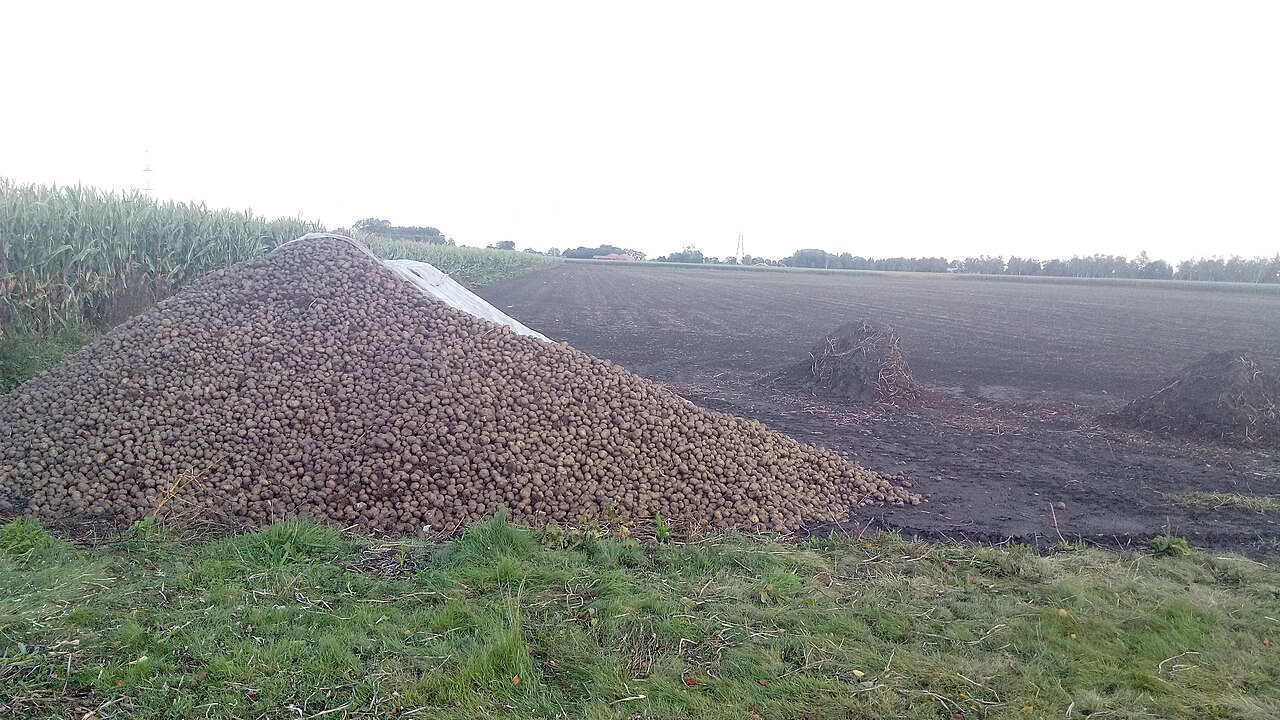
The Potato Share
The caloric foundation. Planted early spring (March–April), harvested summer through fall. Varieties selected for Zone 8b performance and long storage life — Yukon Gold, Kennebec, Red Pontiac, and others. Stored in cool, dark conditions, these last 4–6 months without processing.
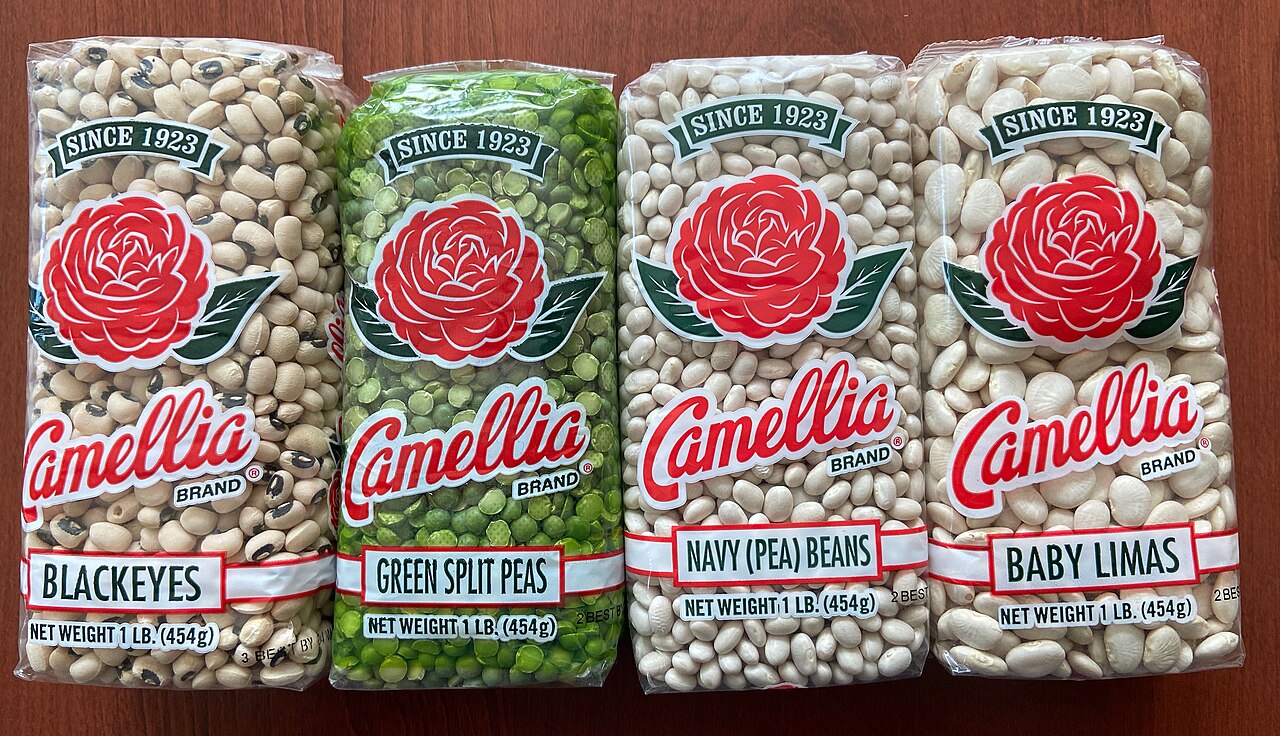
The Bean Share
The protein backbone. Planted late spring (May–June), harvested and dried in fall. Five varieties selected for PNW performance and nutritional diversity — Black Turtle, Pinto, Cannellini, Cranberry, and Calypso. Properly dried beans store for years, not months.
Together, the Potato Share and Bean Share provide the nutritional floor — the staple calories and protein that keep your household fed regardless of what happens at the grocery store. Everything else — eggs from our laying hens, storage vegetables like squash and root crops, fresh seasonal greens — layers on top of that foundation. The foundation comes first.
Why this matters for your household — and what it actually feels like
Both models of CSA involve eating well. The difference is what "well" means first.
With a market CSA, you might be planning how to use your shishito peppers at the weekend dinner party, or figuring out what to do with a beautiful but unfamiliar bunch of lemongrass, or arranging heirloom cherry tomatoes in five colors on a cheese board. That's genuinely lovely — and it reflects a food system that has the luxury of optimizing for novelty and culinary art. Those crops are also wildly space-inefficient: a single row of shishito peppers or a bed of edible flowers or microgreens produces almost no calories per square foot. They exist in a CSA because the underlying assumption is that calories are cheap and available at the store. The CSA is the supplement, not the foundation.
With a provision CSA, you're eating well in a different sense. "Well" means your pantry is stocked — deeply, reliably stocked — while the world tosses and turns. It means opening the root cellar in February and seeing bins of potatoes, braids of onions and garlic, crates of winter squash, and jars of dried beans, and knowing that your household is fed regardless of what's happening at the grocery store or on the news. It means figuring out creative ways to use your garlic, onions, and potatoes this week — and discovering that simple ingredients prepared with care are some of the most satisfying food you've ever eaten.
And here's the part that surprises people: provision farming produces abundance, not scarcity. When your caloric base is secure, generosity becomes natural. You find yourself thinking about which neighbor might appreciate a bag of potatoes this week — the one who's between jobs, or the elderly couple down the street. You barter some of your surplus with the CSA member who has a robust asparagus patch or a backyard fig tree. You pool surplus with other members and reinvest it back into the farm as next year's seed stock, or sell it at the local market to fund community improvements. The joy of a provision CSA isn't the novelty of the ingredient — it's the peace of mind that comes from enough, and the freedom that enough creates to be generous.
Here's what that abundance looks and feels like in practice: your root cellar in October, full. Potatoes in burlap sacks, squash lined up on shelves, garlic braids hanging from the rafters, onions curing in mesh bags. You open the cellar door and the smell is earth and possibility. Upstairs, a pot of potato soup on the stove — three ingredients, all from your share, and it tastes better than anything you'd buy because you know the soil it grew in. That's not survival. That's a good life, built from the ground up.
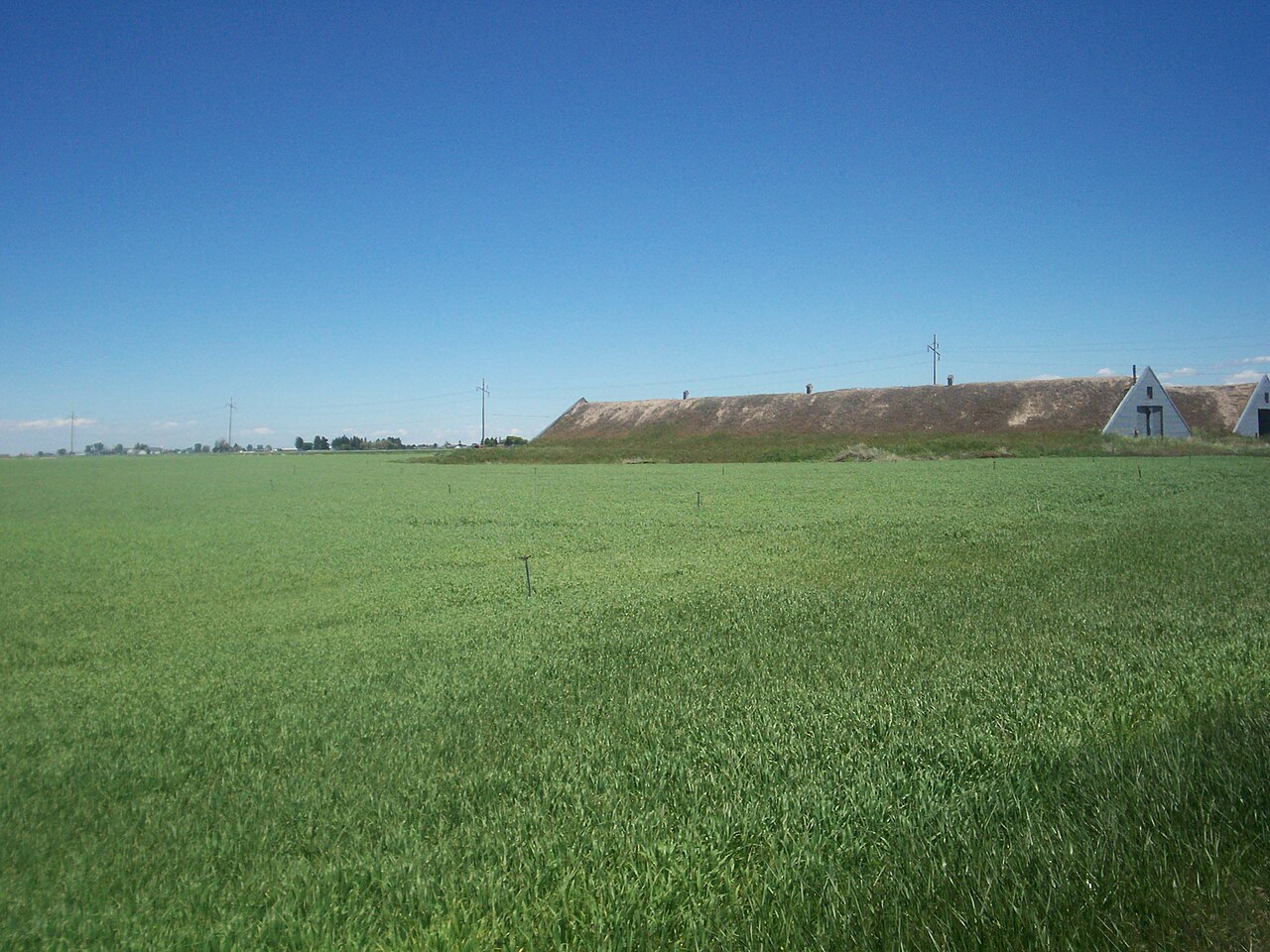
Food security, at its heart, means this: if diesel hits $8 a gallon and grocery prices spike 40% and the shelves at Fred Meyer are spotty for months — your family still eats. And not just your family — your neighbors too, because you planned for abundance, not just sufficiency. If the answer to "can my household eat?" currently depends entirely on a supply chain you don't control, that's a vulnerability you can measure and address. That's what we're here for.
A Resiliency CSA share addresses it directly. The math on this page also shows why doing it alone is so difficult — a family's provision needs exceed what a standard residential lot can support. But a shared acre, managed intensively with solar-powered irrigation and built-up soil, can feed 30–45 adults from the same land that one family couldn't fully use. That's the power of community-scale provision farming. Our work-share program teaches every skill involved, and every member who learns to grow even a portion of their own staples at home makes the whole network stronger.
That's the real difference between a market CSA and a provision farm. A traditional market CSA does meaningful work — it builds transformative community relationships between farmers and families within the context of relative stability: cheap global oil, open shipping lanes, functioning supply chains, and the broad predictability of an imperial economy with unrestricted energy flows. That context made it possible to focus on variety, seasonality, and culinary quality. And when that context holds, market CSAs are wonderful.
A provision CSA is built for a different context — one defined by climate change, geopolitical volatility, and unpredictable disruptions to energy, fertilizers, and supply chains caused by both natural and geopolitical forces. It builds resilient, robust community not as a lifestyle choice but as a practical necessity. The crops are chosen for calories and storage life, not culinary novelty. The relationships are structured around mutual aid and shared labor, not just weekly box pickups. The design assumption isn't stability — it's that the systems we've depended on are becoming less reliable, and the communities that prepare together will fare better than those that don't.
Start with the foundation
The Potato Share plants this week. The Bean Share plants in May. Together, they're the most efficient path to year-round food security for your household — and you don't need to know anything about farming to start. We handle the growing. You get the food.
Reserve Your Share → See Ways to Participate →